
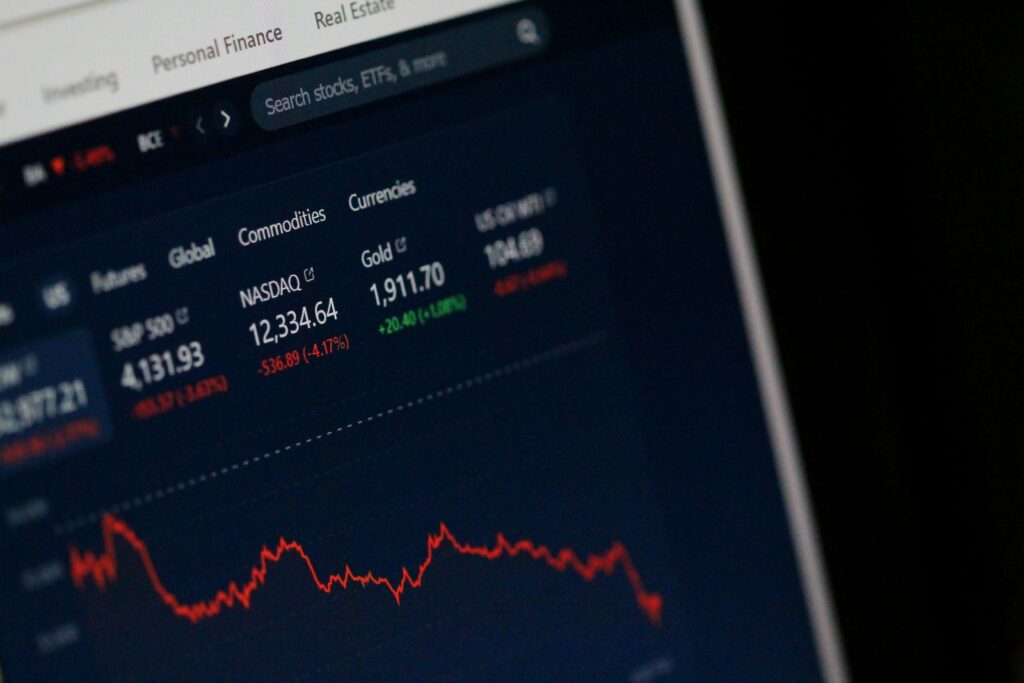
Overview of Current Market Situation
The current state of U.S. stock futures reflects a notable decline as investors await significant retail earnings reports. Following a period of fluctuations, futures for major indices have shown a downward trend, signaling caution among market participants. The forthcoming earnings from prominent retailers such as Target and Lowe’s have heightened scrutiny, impacting investor sentiment considerably. Analysts are keenly focused on these reports as they often serve as a bellwether for consumer spending and economic health.
The mood in the market is shaped by multiple factors, including economic indicators and overall market performance leading up to these earnings announcements. Investors are particularly concerned about slowing economic growth, inflation pressures, and shifting consumer behaviors, which add layers of complexity to the assessment of retail performance. Such conditions may lead to volatility in stock futures, creating an atmosphere of uncertainty.
<p a="" and="" announcements.="" approaches,="" are="" as="" becoming="" between="" boost,="" broader="" can="" cautious="" conditions.="" consequently,="" could="" date="" dependency="" disappointing="" disclose="" downward="" earnings="" emerges="" exacerbate="" existing="" expectations="" expected="" figures="" focal="" for="" forthcoming="" frequently="" futures="" highlights="" impacting="" implications="" in="" information.
Importance of Upcoming Retail Earnings
The forthcoming earnings reports from major retail giants such as Target, Lowe’s, and Walmart hold significant importance for investors, analysts, and consumers alike. These reports serve as a vital barometer for assessing the health of the retail sector, providing critical insights into consumer spending habits and overall economic conditions. As these companies play a pivotal role in the economy, their financial performance can yield valuable indicators that reflect broader trends in consumer behavior.
The retail sector is often considered a leading indicator of economic vitality, as consumer spending comprises a substantial portion of overall economic activity. Earnings reports from these prominent retailers are scrutinized not only for their financial results but also for management’s outlook on future growth prospects and market conditions. The insights garnered from these reports can shed light on factors such as shifting consumer preferences, the impact of inflation, and the effectiveness of pricing strategies in response to changing economic dynamics.
Moreover, the performance of these retailers is also influenced by external factors such as tariffs and supply chain disruptions. Retailers like Walmart and Lowe’s may face challenges in maintaining profit margins due to increased costs associated with imports impacted by trade policies. Therefore, examining these companies’ earnings reports allows stakeholders to gauge how effectively they navigate these challenges and position themselves in a competitive marketplace.
In summary, the upcoming earnings reports from large retailers are crucial for understanding the current state and outlook of the retail sector. By analyzing the performance and strategic responses of these companies, investors can gain valuable insights into consumer confidence and spending patterns. As such, these reports are significant not only for individual companies but also for the overall economic landscape.
Consumer Spending Trends and Economic Indicators
Recent retail sales data indicates a complex relationship between consumer spending trends and economic indicators, particularly against the backdrop of persistent inflationary pressures. Despite significant concerns regarding rising prices, consumer spending has remained unexpectedly robust. This resilience is evident in various sectors, where discretionary spending continues to support retail growth. According to the latest reports, retail sales showed an uptick, suggesting that consumers are willing to continue spending even as inflation affects their purchasing power.
This phenomenon introduces an apparent dichotomy; while consumer sentiment reflects some level of concern about inflation and its long-term implications, short-term spending behaviors remain relatively strong. Surveys suggest that many consumers are adapting to the higher costs of living, often prioritizing essential goods while recalibrating their budgets for discretionary items. This adaptability may indicate a shifting consumer mindset, where individuals are increasingly focusing on value and necessity, impacting the overall economic landscape.
Investor outlook consequently becomes more cautious as markets react to these mixed signals. A sustained pattern of strong retail sales could bolster confidence in economic stability, leading to predictions of growth. However, concerns about inflation may overshadow these positive indicators, contributing to increased volatility in stock futures. As earnings reports from major retailers are released, they will provide crucial insights into how these spending trends translate into financial performance. Understanding this balance between consumer confidence and inflation will be essential for investors looking to navigate the complexities of the current economic environment. The implications of these behaviors extend beyond immediate market reactions, influencing future economic policies and investor strategies as they seek to align with observable consumer sentiment and behaviors.
The Federal Reserve’s Role and Implications for the Market
The Federal Reserve plays a crucial role in determining monetary policy, which can significantly impact financial markets, including the stock market. Market participants closely monitor the Fed’s interest rate decisions as these decisions have far-reaching implications for overall economic conditions. As speculations rise about potential interest rate cuts, particularly in the context of upcoming major retail earnings reports, the expectations surrounding consumer behaviors may shift considerably.
Hints of an imminent rate cut from the Federal Reserve could provide immediate relief to markets. Lower interest rates typically encourage consumer spending, as borrowing costs decrease, potentially leading to increased sales for retailers. This environment fosters a sense of consumer confidence, which is pivotal for economic growth. Retailers, particularly in an era marked by volatility, will be keen observers of these signals from the Fed, as they can either bolster or dampen consumer willingness to spend based on perceptions of economic stability.
Moreover, the Federal Reserve’s future monetary policy actions are interlinked with broader economic trends. An affirmative stance on reducing rates often signals that the Fed is seeking to stimulate economic activity amid sluggish growth or other adverse conditions. For retailers, this could translate into strategies focused on aggressive pricing, promotions, and inventory management to capitalize on an anticipated uptick in consumer engagement. Conversely, prolonged uncertainty regarding interest rates can lead to cautious behavior from both consumers and businesses, potentially stunting retail performance.
In summary, the Federal Reserve’s decisions regarding interest rates carry significant implications for the market, particularly as they relate to retail earnings and consumer confidence. Understanding these dynamics will be essential for stakeholders looking to navigate the complex landscape of the current economic climate.