
By: Jemy Finance Market Research Team At Jemy Trade
Date: August 22, 2025
A New Global Economic Order
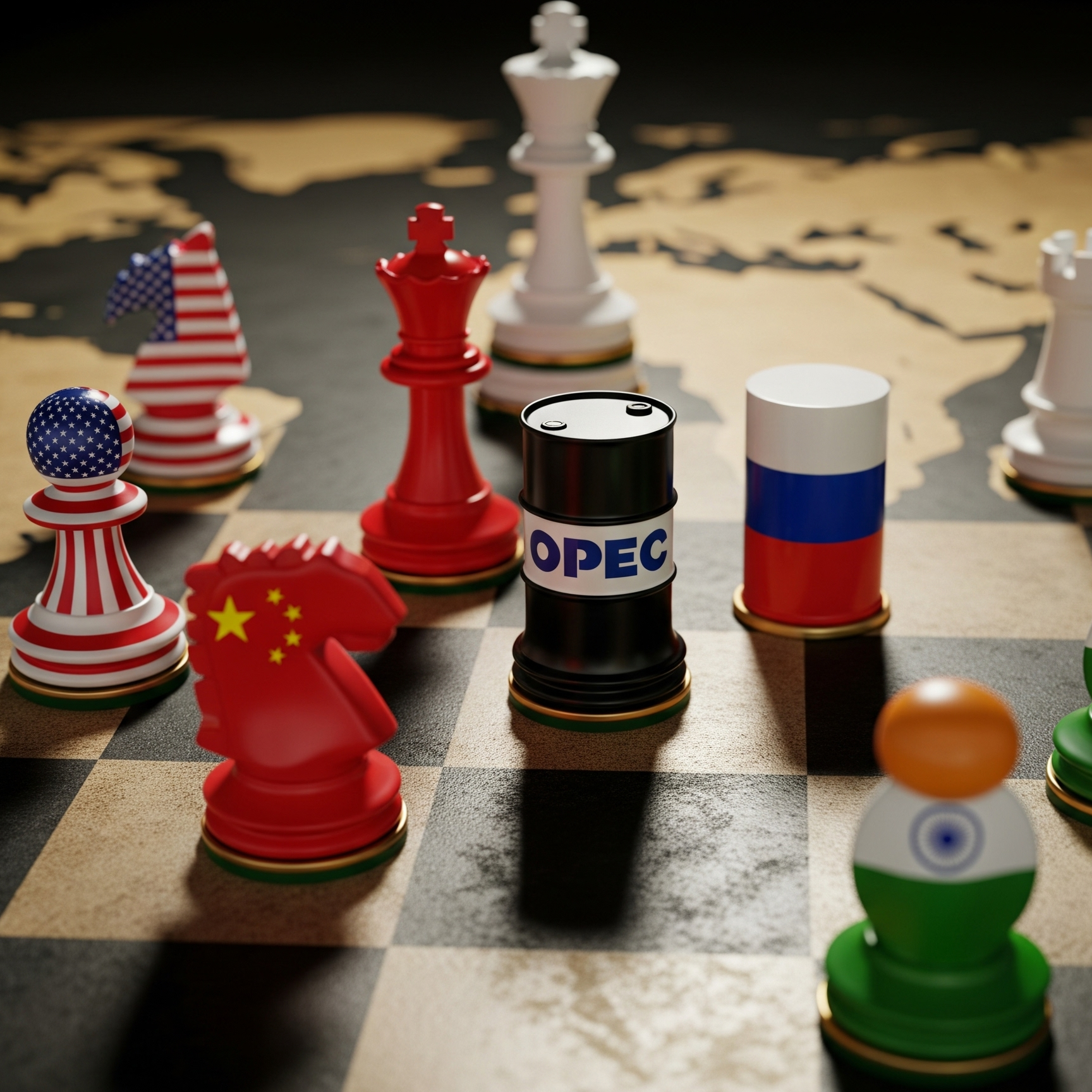
The global economic landscape is undergoing a tectonic shift. The unipolar moment that once defined the post-Cold War era has given way to a more complex, multipolar world where economic influence is dispersed among a diverse set of state and non-state actors. The established dominance of traditional Western powers is being challenged by the meteoric rise of new players and the resurgence of old ones, each vying for a greater share of global influence. This article explores the evolving roles of the United States, China, Russia, India, and the OPEC bloc, analyzing their strategies and the intricate web of relationships that will define the next era of the world economy.
The United States: The Incumbent Power Navigating a New Reality
The United States remains the world’s foremost economic power, anchored by its deep and liquid capital markets, its role as the issuer of the world’s primary reserve currency (the U.S. dollar), and its unparalleled leadership in technological innovation. Silicon Valley continues to be the global hub for disruptive technologies, while Wall Street dictates the flow of international finance. However, the U.S. is facing significant headwinds. Mounting national debt, deep political polarization, and a widening wealth gap are creating domestic challenges. Externally, its leadership is being contested, not just by rivals, but also by allies seeking greater strategic autonomy. U.S. policy is now a delicate balancing act between leveraging its existing strengths and adapting to a world where it can no longer unilaterally dictate the economic agenda.
China: The Pacing Challenger to the Throne
China’s transformation from a developing nation to an economic superpower is the single most important story of the 21st century. As the world’s factory, its manufacturing prowess has reshaped global supply chains. Through ambitious projects like the Belt and Road Initiative, Beijing has extended its economic and political influence across continents. Domestically, China is attempting a monumental pivot from an export-led model to a more sustainable, consumption- and technology-driven economy. Yet, this transition is fraught with peril. A looming property crisis, demographic pressures from an aging population, and a state-driven regulatory crackdown on its own tech giants pose significant risks to its continued ascent. The dynamic between the U.S. and China has become the central rivalry of our time, a competition that plays out in trade, technology, and the setting of global standards.
Russia: The Energy and Geopolitical Disruptor
Russia’s economic power is intrinsically linked to its vast natural resources. As a leading exporter of oil and natural gas, it wields significant leverage over global energy markets. The recent geopolitical conflicts and subsequent Western sanctions have fundamentally altered Russia’s economic orientation, forcing a “pivot to the East” and deepening its economic ties with China and other non-Western powers. While sanctions have aimed to isolate Moscow, they have also accelerated the search for alternatives to the dollar-denominated financial system. Russia’s strategy is one of asymmetric disruption, using its energy and commodity exports to challenge the established order and forge alliances of convenience with other nations resentful of Western dominance.
India: The Emerging Democratic Giant
With a population that has now surpassed China’s, India is poised to become a major engine of global growth. Its key strength lies in its “demographic dividend”—a young, upwardly mobile population—and its world-class IT and service sectors. New Delhi is actively promoting itself as a viable alternative to China for global manufacturing through initiatives like “Make in India.” However, the path is not without obstacles. Bureaucratic red tape, significant infrastructure deficits, and the challenge of creating enough jobs for its burgeoning workforce remain critical issues. India’s ability to navigate these challenges while leveraging its democratic credentials will determine its trajectory as a leading economic power.
OPEC: The Enduring Cartel of Energy
The Organization of the Petroleum Exporting Countries (OPEC), often in alliance with Russia (as OPEC+), remains a pivotal actor in the global economy. Its decisions on production levels can send shockwaves through financial markets, influence global inflation rates, and dictate the economic fortunes of both producer and consumer nations. The bloc is currently navigating two major challenges: the shale revolution in the United States, which has altered the supply landscape, and the global long-term transition towards renewable energy. OPEC’s ability to maintain cohesion and manage the market in the face of these structural shifts will be crucial for global economic stability.
Conclusion: An Interconnected and Competitive Future
The world economy is no longer a simple hierarchy but a complex, interconnected system of competing and cooperating powers. The US-China rivalry sets the primary axis of competition, but the strategic decisions of Russia, the rise of India, and the influence of OPEC create a dynamic and often volatile environment. Understanding these power shifts is essential for navigating the risks and opportunities of a global economy in the midst of a historic transformation.