
By: Jemy Finance Market Research Team At Jemy Trade
Date: August 22, 2025
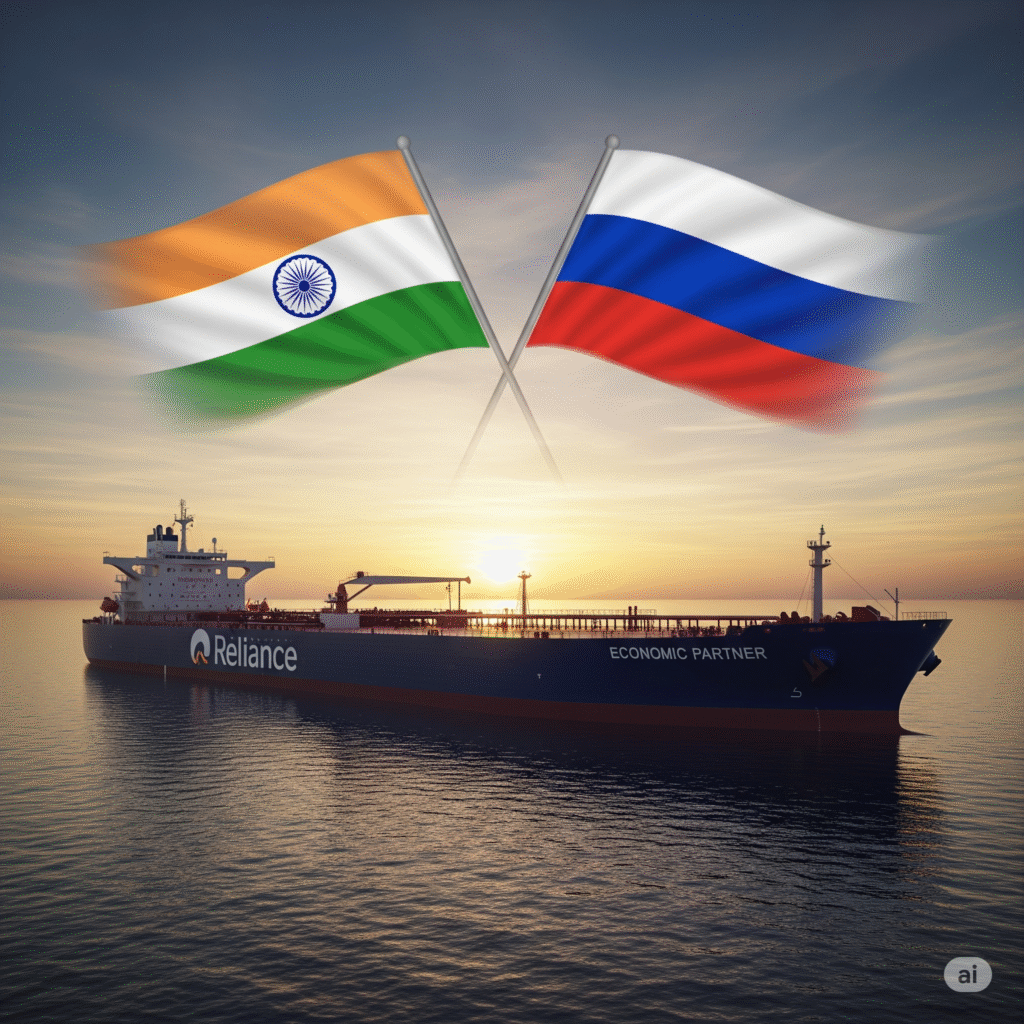
NEW DELHI/MUMBAI – In a strategic pivot that has redrawn global energy maps, India has emerged as a top client for Russian crude oil, a development made possible in large part by the aggressive procurement strategy of Reliance Industries, the conglomerate led by Asia’s wealthiest individual, Mukesh Ambani. This alliance of convenience has provided Moscow with a critical economic lifeline amid stringent Western sanctions while simultaneously delivering a significant energy discount to New Delhi, illustrating a pragmatic and opportunistic approach to navigating a complex geopolitical landscape.
Since the imposition of sanctions on Russia, its crude oil has been trading at a considerable discount to global benchmarks like Brent. While many Western nations and their allies have shunned Russian energy, India has stepped into the void, dramatically increasing its imports. At the heart of this surge is Reliance Industries’ Jamnagar refinery, the largest and most sophisticated refining complex in the world. With its advanced capabilities, the facility can process a wide variety of crude types, including the Russian Urals blend, and refine it into high-value products like gasoline and diesel for both domestic consumption and export.
Analysis of shipping and trade data reveals that Reliance has become one of the most significant single corporate buyers of Russian seaborne crude. The company has skillfully leveraged its market position and logistical prowess to secure favorable terms, purchasing vast quantities of discounted oil. This has not only boosted the profitability of its refining operations but has also contributed to India’s overall energy security, helping to cushion the nation from the full impact of volatile global energy prices.
This trade has not been without controversy. U.S. and European officials have expressed concerns that India, by purchasing large volumes of Russian oil, is indirectly financing Moscow’s war efforts. Recent statements from U.S. officials have taken a sharper tone, with some aides accusing India of “opportunistic” purchasing and highlighting that some of the refined products are subsequently exported to Western markets, a practice they argue undermines the spirit of the sanctions. The U.S. has recently imposed an additional 25 percent tariff on India for its Russian imports, directly targeting this trade and putting the South Asian nation in the highest tier of tariffed nations.
Despite the international pressure, the Indian government has consistently defended its procurement strategy, framing it as a sovereign decision based on national interest and the need to provide affordable energy to its 1.4 billion citizens. The synergy between government policy and the commercial imperatives of Reliance Industries has been a key driver of this trend. For Reliance, it is a straightforward and highly profitable business decision. For the Indian government, it is a matter of pragmatic foreign and economic policy.
The role of Mukesh Ambani in this dynamic cannot be overstated. His ability to marshal the vast resources of Reliance to make bold, large-scale bets has been instrumental. By positioning Reliance as a pivotal player in the re-routing of global oil flows, he has not only enhanced his company’s bottom line but has also elevated his influence on the global stage. This move showcases a new phase of economic statecraft, where powerful multinational corporations, in alignment with national interests, can shape geopolitical outcomes.
In conclusion, India’s continued and massive importation of Russian crude is a multifaceted issue driven by economic incentives and geopolitical strategy. At the center of it all is the powerful combination of a government seeking energy security and a corporate titan in Mukesh Ambani who possesses the infrastructure and commercial acumen to capitalize on a historic shift in the global energy market. As long as Russian crude remains discounted and Western pressure does not escalate to secondary sanctions, this lucrative and mutually beneficial trade relationship is likely to endure.