
By: Jemy Finance Market Research Team At Jemy Trade
Date: August 22, 2025
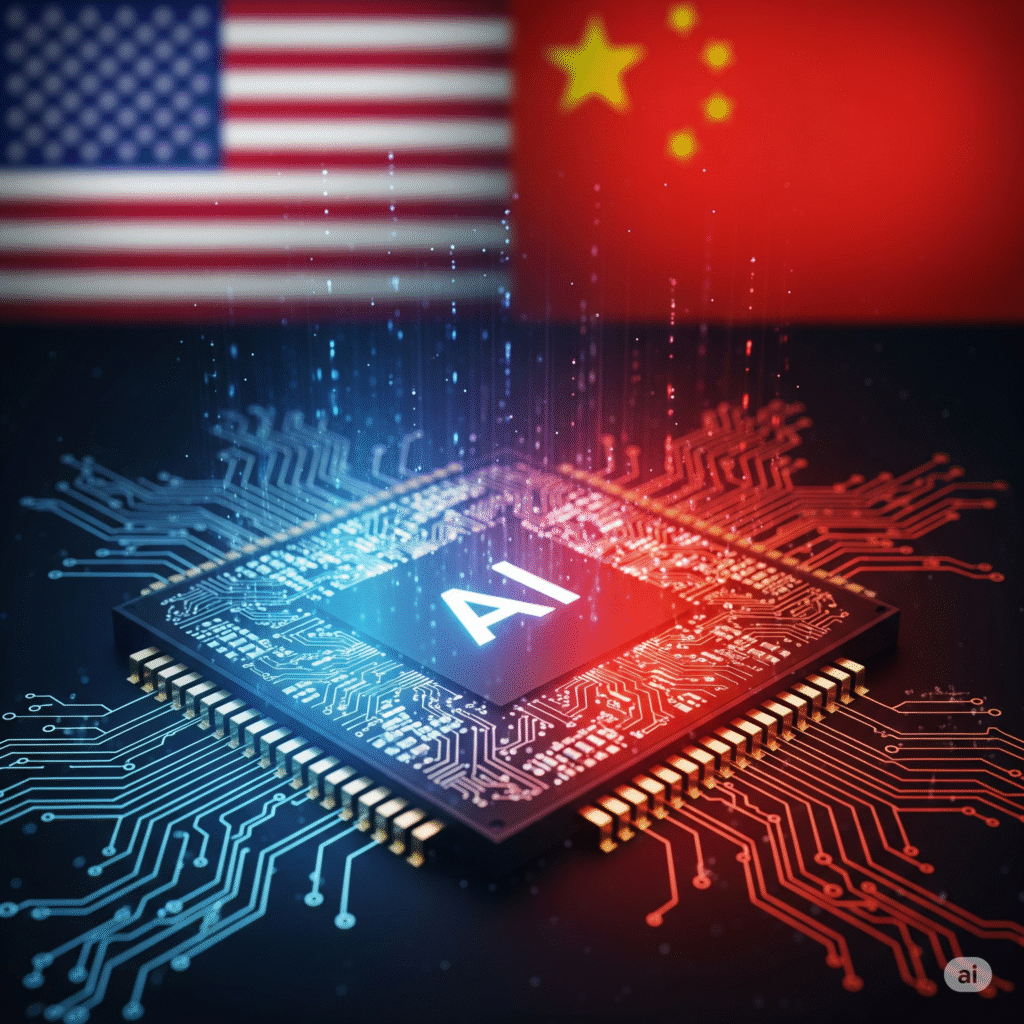
SANTA CLARA, CA – In a strategic pivot that underscores the escalating complexities of the global technology landscape, semiconductor powerhouse Nvidia has reportedly ordered a halt to the production of its H20 artificial intelligence chip. This chip was meticulously engineered as Nvidia’s flagship product for the Chinese market, designed to navigate the labyrinth of U.S. export controls. The decision to suspend its production sends shockwaves through the industry, signaling a significant failure in the company’s high-stakes effort to retain its dominance in a critical market.
The suspension is the culmination of a dual-front battle for the H20. Internally, within the Chinese market, the chip has been met with a notably cool reception. Major technology consumers, including cloud computing giants like Alibaba and Tencent, have reportedly expressed disappointment with the chip’s capabilities. The H20, a deliberately scaled-down version of Nvidia’s premier AI processors, has struggled to demonstrate a compelling performance advantage over increasingly powerful domestic alternatives. This has led to lower-than-expected order volumes, leaving Nvidia in the precarious position of having a product that is too weak for its target audience.
Externally, the H20 has been under a constant cloud of scrutiny from Washington. Developed alongside the L20 and L2 chips, the H20 was Nvidia’s direct response to the stringent U.S. export rules updated in October 2023. These regulations effectively barred the sale of the company’s cutting-edge H100 and A100 AI chips to China, aiming to curb the nation’s technological and military advancement. Nvidia’s compliance-focused chips were an attempt to thread a very fine needle: powerful enough to be commercially viable in China, yet restricted enough to appease U.S. regulators. The production halt strongly suggests this delicate balance was not achieved, placing the chip in a geopolitical no-man’s-land.
The fallout from this decision poses a severe challenge to Nvidia’s financial outlook. For years, the Chinese market has been a cornerstone of the company’s revenue, accounting for a significant percentage of its sales. This halt creates a vacuum that local competitors are eagerly filling. Huawei, in particular, has emerged as a formidable challenger with its Ascend 910B AI chip. Industry insiders and performance benchmarks suggest that the 910B rivals, and in some crucial aspects, surpasses the H20. This has emboldened major Chinese firms to slash their orders for Nvidia’s product and deepen their investment in homegrown technology, thereby accelerating Beijing’s long-term goal of achieving semiconductor self-sufficiency.
On a macroeconomic scale, this event is a potent symbol of the ongoing “chip war” and the broader trend of technological decoupling between the world’s two largest economies. It highlights the immense operational and political risks that Western technology companies face when conducting business in China. The suspension of the H20 is far more than a simple production line stoppage; it represents a potential inflection point in the global AI hardware arms race. The industry, its investors, and governments worldwide will now be watching with bated breath to see how Nvidia recalibrates its strategy in a market that is rapidly and perhaps irreversibly, closing its doors.